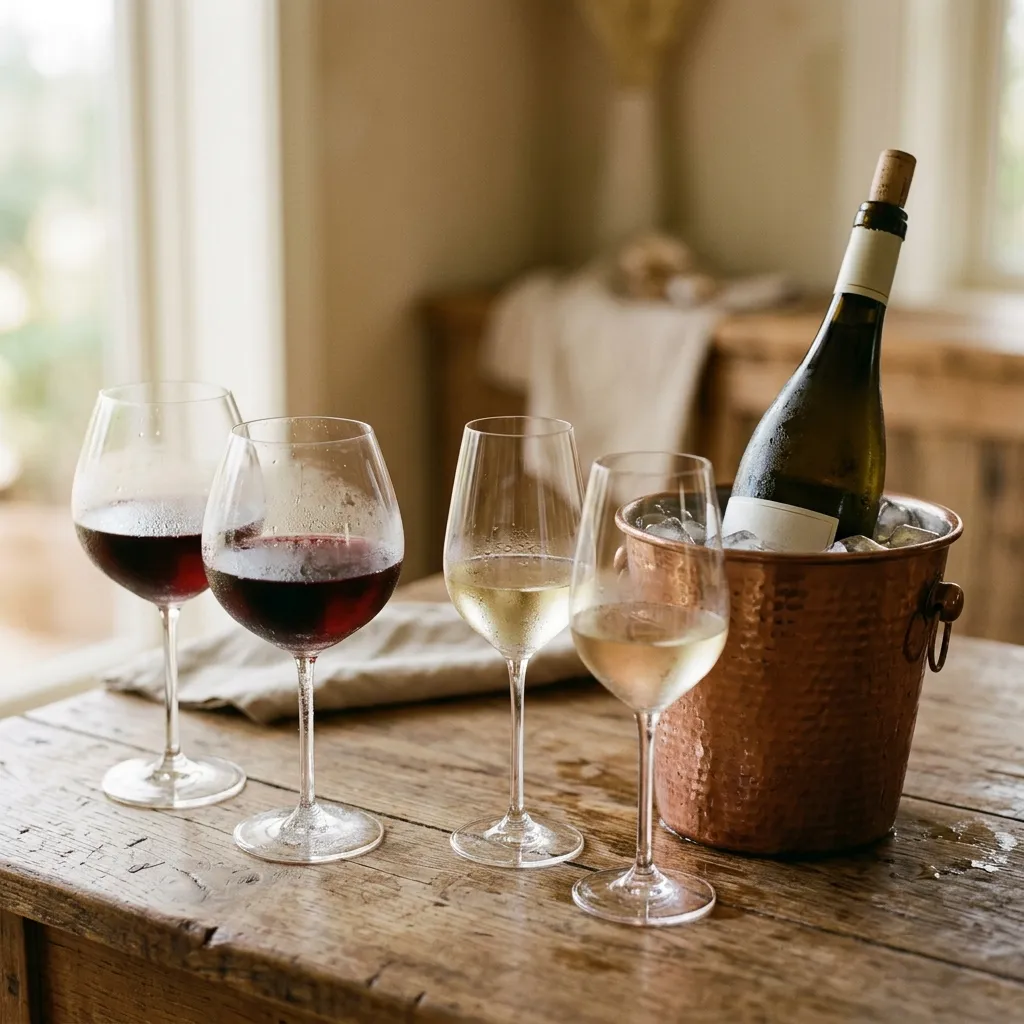
What temperature and glass to serve wine in
You can buy great wine and ruin it with two things that cost nothing: the wrong temperature and a random glass. A warm red turns alcoholic and heavy, an icy white loses all its aroma, and the wrong glass hides what you paid for. The good news: this is the cheapest way to make wine taste better, without spending a penny more.
Temperature - the quiet flavour killer
Most of us drink reds too warm and whites too cold. There is an old belief that red is served at room temperature - but that rule was made when rooms were 16-18 degrees, not 23. Warm wine highlights the alcohol and blurs the fruit.
Roughly:
- Sparkling and light whites - well chilled, 6-8 degrees.
- Fuller whites and rosé - 8-12 degrees.
- Light reds (pinot noir, gamay) - cool, 12-14 degrees, you can even chill them slightly.
- Full reds (cabernet, syrah) - 16-18 degrees, that is cooler than the room.
A simple trick: put the red in the fridge for 20 minutes before serving, and take the white, normally kept in the fridge, out 20 minutes before serving. One rule, 20 minutes both ways. Both will gain.
Why the glass makes a difference at all
The glass is not snobbery - the shape really directs the aromas and the flow of the wine. But you do not need twenty kinds, just understand two things:
- The bowl (the part where you pour the wine) gathers the aromas. The more aroma in the wine, the more a bigger bowl helps.
- The narrowing towards the top focuses those aromas under your nose - that is why a good glass tapers at the top.
How many glasses you really need
In practice, two are enough:
- A larger one for reds - the big bowl lets the wine breathe and develop its aromas.
- A smaller one for whites - it keeps the wine cool and focuses the fresh, delicate notes.
For sparkling, the classic flute looks nice, but an ordinary white wine glass shows the aroma better - the narrow flute smothers it. The rest is play for the advanced.
What to avoid
- Filling to the brim. Pour to the widest part of the bowl, about one third - you leave room for the aromas and can swirl.
- A thick, small glass for everything - it concentrates mainly the alcohol.
- Ice in the wine (with rare exceptions) - it dilutes and kills the flavour. Chill the bottle instead.
Swirl and smell
Once you have a good temperature and a sensible glass, there is one more move: swirl the wine in the glass and smell it before you sip. Swirling releases the aromas, and you sense most of the flavour through your nose anyway. We wrote more about it in the post how to actually taste wine.
Write down what works
The same bottle can taste different at different temperatures - and it is worth remembering which one tasted best to you. In GustoNote you can note the serving temperature with each tasting, mark the aromas on the wheel and rate the profile on the radar. After a few entries you see your own preferences in black and white and stop guessing how to serve the next bottle.