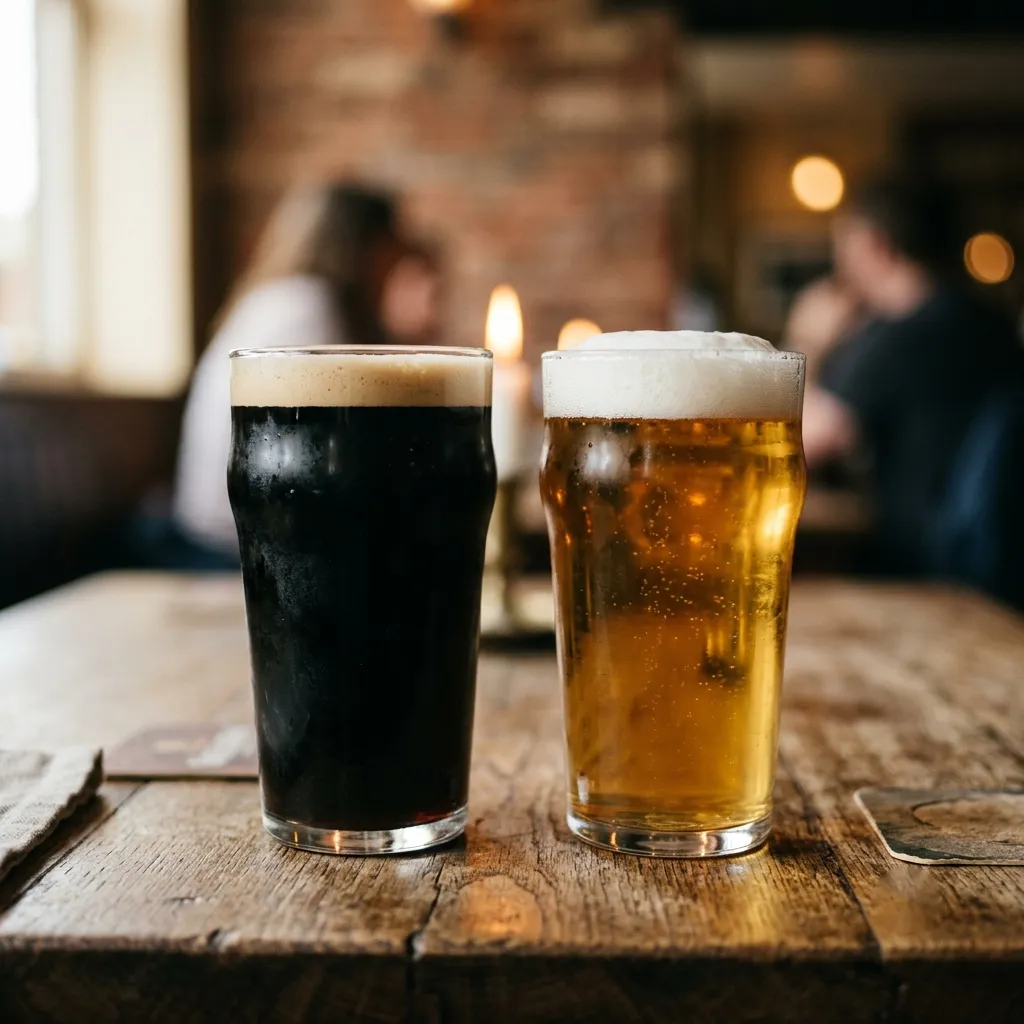
Is dark beer strong and heavy? The colour myth
Dark beer looks intimidating: dense black, creamy head, a heavy character. Many people avoid it assuming it is strong, filling and overwhelming. It is one of the most common beer myths - and a glance at the numbers is enough to break it.
The colour comes from malt, not alcohol
A beer’s colour comes almost entirely from roasting the malt, exactly the way a coffee’s colour comes from roasting the bean. Heavily roasted dark malt gives black colour and notes of coffee, chocolate and toasted bread. Alcohol is colourless and has nothing to do with it. You can brew a black beer that is low in strength and a pale-gold beer that is high - colour and alcohol are two independent things.
The numbers that end the argument
The best proof is the classics:
- Guinness Draught - the famous, pitch-black beer is only about 4.2%, less than most pale lagers.
- Schwarzbier (German dark lager) - around 5%, light and dry despite the blackness.
- British mild or dry stout - often 3.5-4.5%, dark yet gentle.
By contrast a pale, gold tripel or golden strong can hit 8-9%. So it is often the pale beer that is stronger. Where the different flavours of dark beers come from we unpack in dark beers: porter and stout.
Dark does not mean heavy
The second misconception is weight. Yes, there are dense, strong imperial stouts that are like a liquid dessert. But plenty of dark beers are light in body and easy drinking. Guinness, despite its blackness and creamy head, is surprisingly light and low in calories. Roasted malt gives coffee and chocolate flavour, but it need not give weight. Colour speaks to flavour, not to heft.
Where the myth comes from
The myth comes from association: dark beers smell and taste „strong” (coffee, chocolate, roasted notes), so the brain suggests they must also be strong in alcohol and heavy. It is the linking of intense flavour with intense strength - which is exactly why it is so easy to confuse „tastes strong” with „high in alcohol”. It is the same mistake that haunts coffee too.
What colour really tells you
Colour is a clue to the flavour profile, not to strength or weight:
- Pale - usually grain, hops, freshness, dryness.
- Amber - caramel, toffee, a little sweetness.
- Dark - coffee, chocolate, toasted bread, sometimes dried-fruit notes.
And how much alcohol a beer has you check on the label, not in the glass - how to read it we covered in how to read a beer label.
See for yourself
The best way to bury this myth is to try a light dark beer (Guinness, schwarzbier, mild) and see how little it has in common with „heavy”. To catch what roasted malt really brings, write your impressions down - in GustoNote you note the style, strength and profile for every beer, and the aroma wheel suggests words for coffee, chocolate or caramel. After a few entries colour stops scaring you and starts hinting at flavour. If you are only just stepping beyond pale lager, start with lager vs ale.