Lager vs ale - the two souls of beer explained simply
Beer styles can overwhelm you: pilsner, IPA, stout, weizen, saison and a hundred other names. Yet underneath, this whole world splits into two great families: lager and ale. It is the most important divide in beer, and it rests on something you cannot see in the glass - the yeast.
The difference is fermentation, not colour
Despite the common belief, lager does not mean „pale” and ale does not mean „dark”. A lager can be dark (like a bock or a schwarzbier), and an ale can be pale gold. The real difference is the type of yeast and the temperature it works at:
- Ale - top-fermenting yeast, working warm (usually 15-24 degrees) and fast. Along the way it produces esters and phenols, the compounds behind fruity and spicy aromas.
- Lager - bottom-fermenting yeast, working cold (usually 7-13 degrees) and slowly, after which the beer matures cold for a long time. Hence the name, since „lagern” is German for to store.
Everything else - colour, strength, bitterness - comes down to the malt and hops used, regardless of the family.
What it does to flavour
That cold, slow lager yeast leaves almost no trace of its own. So a lager tastes clean, smooth and dry - the malt and hops are in front, and the beer is refreshing and „transparent”. A classic pilsner or pale lager is exactly this.
Ale yeast is the opposite: it actively adds flavour. That is why many ales carry fruity notes (banana, apple, pear), and Belgian beers even clove and pepper. It is the yeast, not any additive, that gives a wheat weizen its banana-clove profile or a Belgian tripel its spicy character.
Which side is your favourite beer on
A quick map of the most popular styles:
- Lagers: pilsner, pale lager, helles, bock, märzen, dunkel, schwarzbier, baltic porter.
- Ales: IPA and pale ale, weizen (wheat beer), stout and porter, saison, Belgian tripel and dubbel, barley wine, most craft beer.
Hence a fun fact: modern craft beer is largely an ale world, because it is ale yeast that gives the aromatic expression craft is built on. If you like that citrus-resin character, why IPA tastes like grapefruit explains it in more detail.
Why this is worth knowing
Because it instantly organises the shop shelf. Want something clean and refreshing for a hot day or with dinner - look for a lager. Want aroma, fruit, character and something to taste - go for an ale. It works the other way too: when a beer surprises you with banana or clove, you already know it is the ale yeast, not some additive. And if you are only just stepping beyond cold lager, start with beer is more than cold lager.
Test it with two glasses
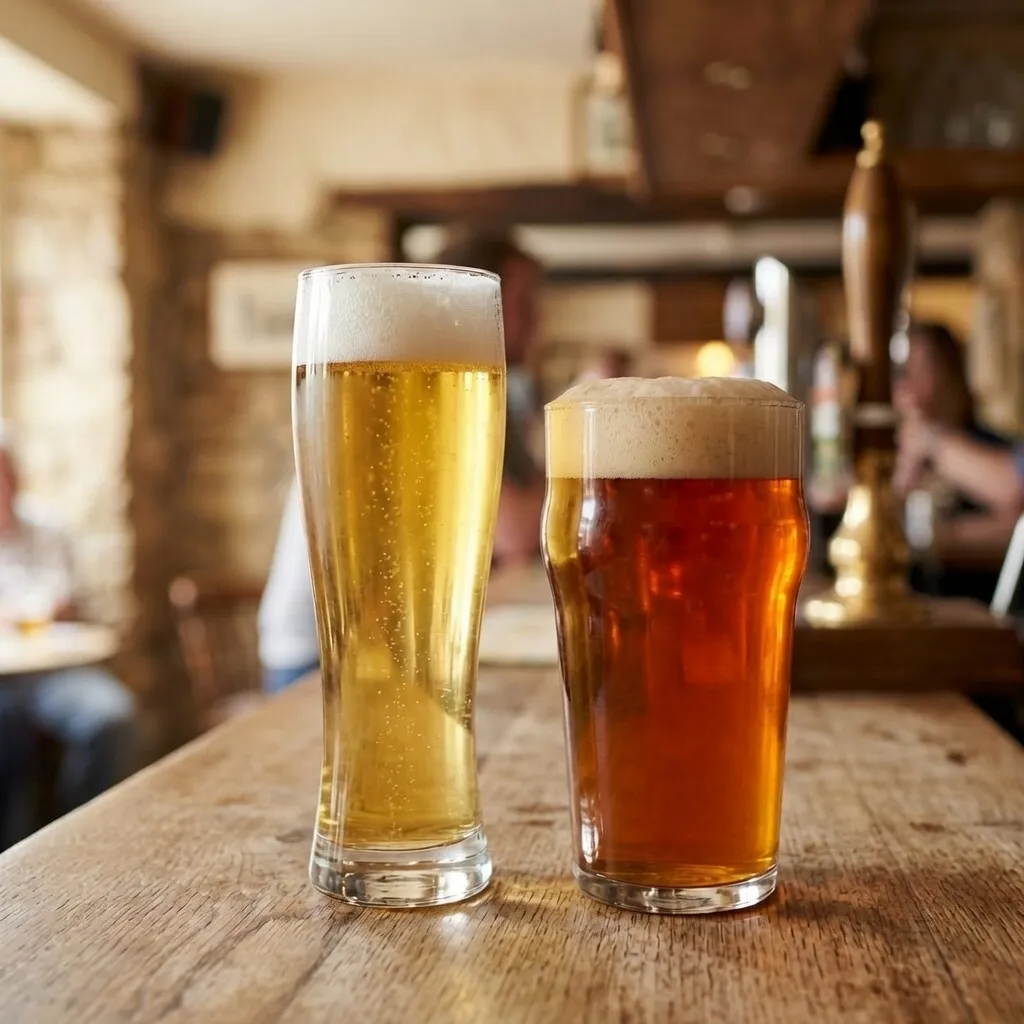
The best test is a pilsner next to a wheat ale, side by side. The first will be clean, grainy, dry. The second - fruity and spicy from the yeast alone. Once you catch that difference, you start hearing it in every beer. To lock it in, write your impressions down - in GustoNote you note the style, hops and malts for every beer, and the aroma wheel suggests words for what you sense. After a few entries you will recognise the family from the first sip.