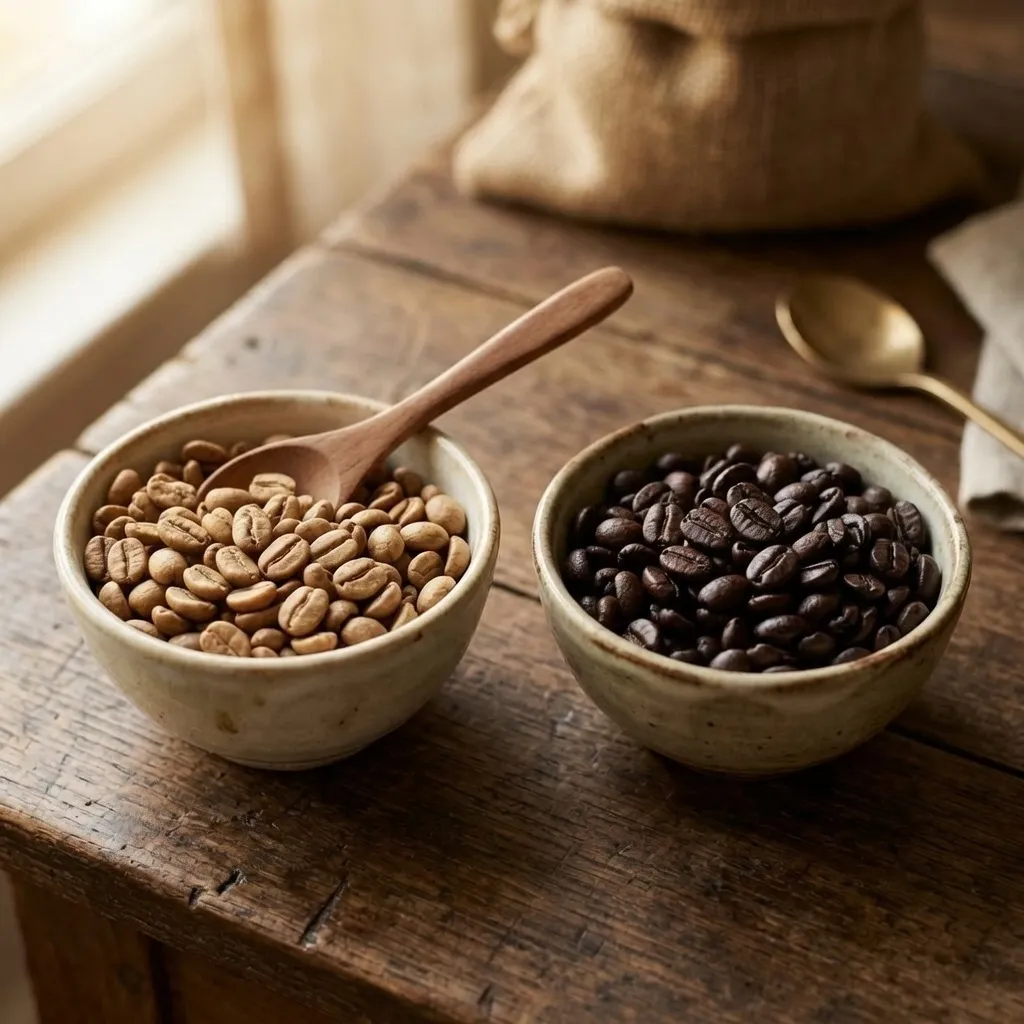
Does dark roast have more caffeine? The strong coffee myth
The logic seems ironclad: dark, heavily roasted coffee tastes more intense, so it must have more caffeine. It is one of the most stubborn coffee myths - and one of the easiest to debunk. Roasting changes a great deal, but caffeine is surprisingly resistant to it.
Caffeine barely disappears in the roast
Caffeine is a fairly stable compound - it survives roasting temperatures and the amount in the bean changes only slightly. A darker roast does not „add” caffeine. What is more, during roasting the bean loses water and mass while swelling in size. That leads to a small but interesting nuance:
- Measured by scoop (by volume) - dark beans are bigger and lighter, so fewer fit in one scoop, meaning slightly LESS caffeine.
- Measured by weight (in grams) - it is practically the same, with a tiny edge to light roast.
Either way the differences are minor. What really decides the caffeine in the cup is the amount of coffee, the method and the brew time - not the colour of the bean.
So where does the myth come from
The myth comes from confusing flavour with strength. Dark coffee tastes „strong”: more bitter, roasty, smoky, intense. The brain translates intense flavour into „lots of caffeine”, though these are two different things. It is exactly the same mistake that makes people think dark beer is stronger than pale - intense flavour gets confused with intense strength.
What roasting really changes
Roasting steers flavour, not caffeine:
- Light roast - more acidity, fruit and origin character (blueberry, citrus, flowers). The bean tells you where it is from.
- Medium roast - a balance of sweetness, body and gentle acidity; the classic, versatile profile.
- Dark roast - less acidity and origin character, more bitterness, chocolate, roasty and smoky flavours. You mostly taste the roast.
The darker it goes, the more the flavour comes from the roasting process and the less from the bean itself. We expand on this in coffee roast levels and in the piece on where coffee gets its flavour.
And what about „strong coffee”
„Strong coffee” is a vague term - for some it means lots of caffeine, for others an intense, bitter flavour, and for others a dense, full body. These are three different things you control separately: caffeine by the amount of coffee and the method, flavour by the roast and the bean, body by the brew method. Espresso tastes strong and intense, yet has less caffeine per serving than a large filter coffee. We touch on that difference in why coffee tastes sour.
Test it on yourself
The best test is to brew the same coffee at two roast levels (if you can get them) or simply to notice consciously which coffee leaves you alert, rather than which one you perceive as „stronger in flavour”. In GustoNote you note the roast, the method and how it set you up for every coffee, and the aroma wheel helps separate „intense flavour” from a real kick. After a few entries you stop choosing coffee by colour and start choosing consciously - for flavour and for caffeine, separately.