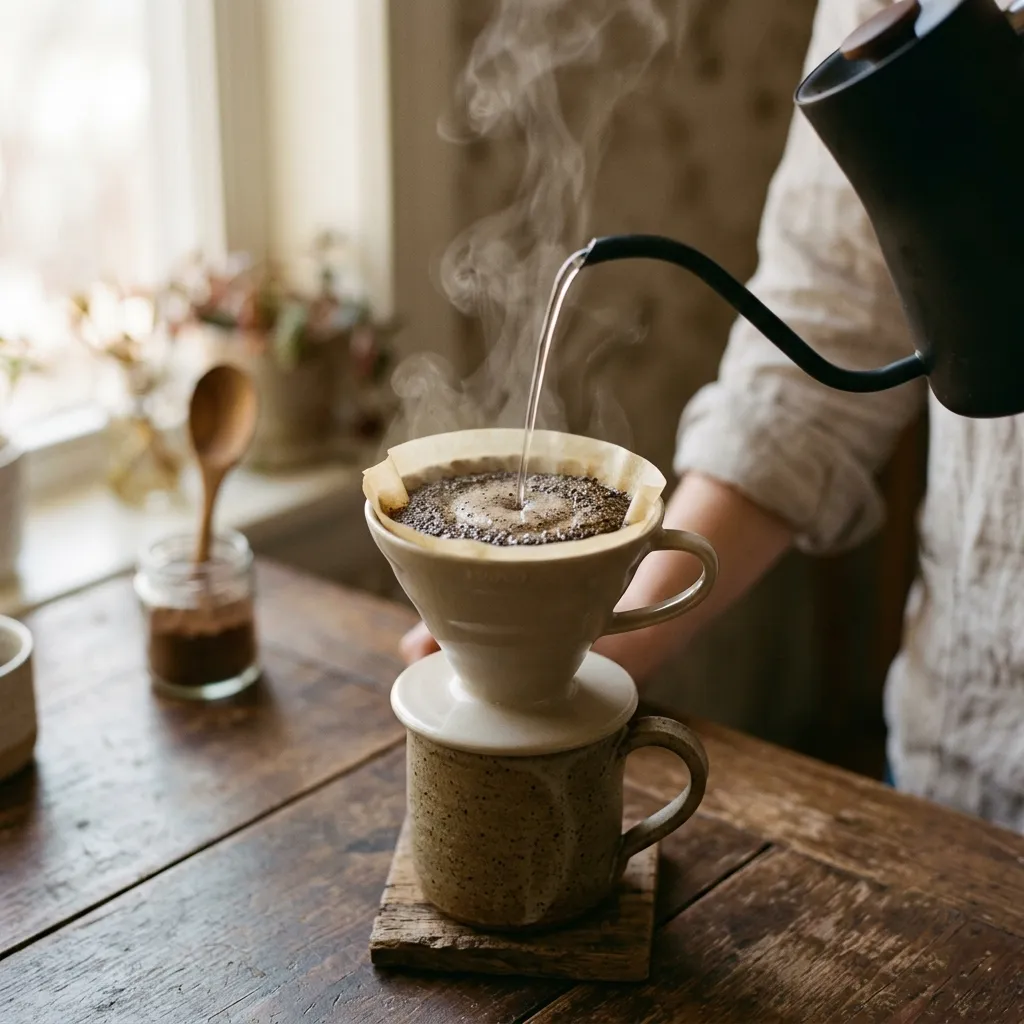
Water for coffee - the hidden ingredient everyone forgets
You invest in good beans, a good grinder and a recipe down to the gram, and the coffee still comes out flat or harsh. Before you blame the beans, look at what there is most of in the cup: water is over 98 percent of what you drink. This invisible ingredient can turn the same coffee into two completely different cups.
Hard or soft - minerals matter
Water is not empty. The minerals dissolved in it (mainly magnesium and calcium) act as a solvent that pulls flavour out of the coffee. That is why the same coffee can taste different in different cities.
- Water that is too soft (heavily softened or distilled) makes coffee flat, sour and empty - there is nothing to extract the aroma.
- Water that is too hard (lots of calcium) makes coffee dull and chalky, and it scales up your gear.
- The sweet spot is water with a moderate mineral content. Magnesium highlights fruit and sweetness, while a little calcium gives body.
You do not need a laboratory. If your tap water is very hard, a simple jug filter or bottled water with low-to-medium mineral content often improves the coffee noticeably.
What to avoid
- Distilled and demineralised water - with no minerals there is nothing to extract with, and the coffee comes out thin.
- Heavily chlorinated water - chlorine from the tap adds an off-taste. A simple activated-carbon filter removes it.
- Water boiled many times over - it loses oxygen and tastes flat. Boil fresh.
Temperature: not boiling
The ideal range is roughly 90-96 degrees. Boiling water (100 degrees) poured straight onto the grounds scorches them and pulls out bitter, astringent compounds. Water that is too cool does the opposite - it extracts too little, and the coffee is sour and under-brewed. If you do not have a kettle with a thermometer, boil and wait 30-45 seconds before pouring. Bitterness and acidity are two sides of the same coin, which we unpack in the piece on why coffee tastes sour.
Amount: keep the ratio
The second thing is how much water to how much coffee. A good starting point is around 60 grams of coffee per litre of water, the popular 1:16-1:17 (one part coffee to 16-17 parts water) for pour-over methods. Too little water - strong, over-extracted coffee. Too much - watery and empty. A kitchen scale makes more difference here than another expensive gadget. The ratio and the grind size are the two dials that fix the flavour fastest.
The simplest cheat sheet
- Water with moderate minerals, not distilled, not very hard.
- A carbon filter if your tap water smells of chlorine.
- Temperature 90-96 degrees, never straight off the boil.
- A ratio around 1:16 for pour-over, measured by weight.
- Freshly boiled water, not reheated for the fifth time.
Test it on yourself
Brew the same coffee twice: once with tap water, once with filtered or bottled water of low-to-medium mineral content. The difference in sweetness and clarity can surprise you. To pick apart what the water changes and what the brewing method changes, write your impressions down - in GustoNote you log the parameters and flavour for every coffee, and the aroma wheel suggests words for what you sense. After a few entries you will see for yourself how strongly the water steers the cup.