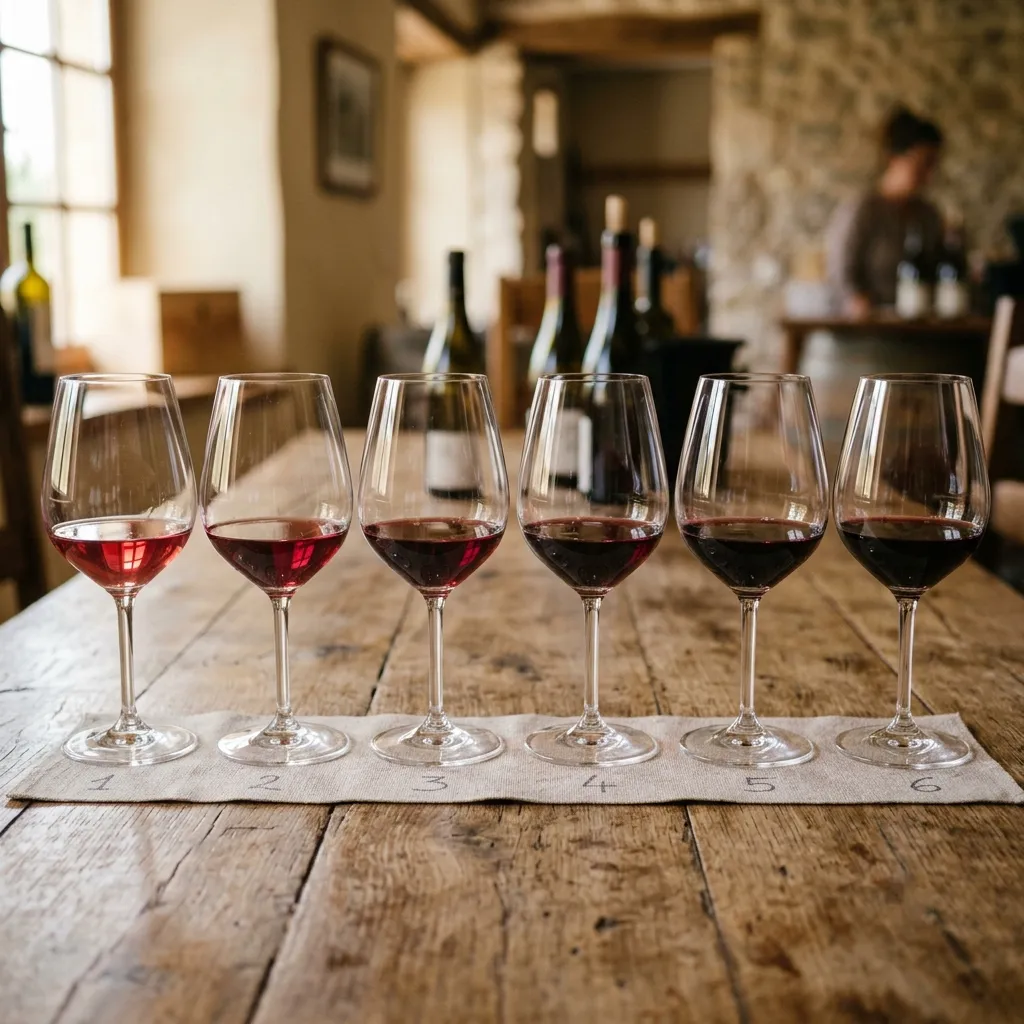
Vertical and horizontal tasting - how to compare wines at home
A single bottle tells you what a wine is. Several bottles side by side tell you why. Comparison is the fastest route to truly understanding wine - suddenly you can see what the vintage, region or grape does, because you have a point of reference. The two simplest ways are the vertical and the horizontal tasting, and you can do both at home at the table.
Vertical: the same wine, different vintages
A vertical tasting is the same wine from the same estate but across several different vintages (say 2018, 2019, 2020). It shows how the wine changes with each year’s weather and with age. A younger vintage tends to be more fruity and lively, an older one - softer, more complex, with notes of maturity. It is the best lesson in what time does to wine. The downside is availability: you need to track down several vintages of the same label.
Horizontal: different wines, the same type
A horizontal tasting is several different wines of the same type and the same vintage - for example three Sauvignon Blancs from different countries, or four reds from one region. It shows the differences between producers, styles and places. It is the easier option to start with, because you can buy the wines without hunting for vintages, and the contrast can be striking: the same grape can taste completely different in New Zealand and in France.
How to set it up at home
A few simple rules to keep the comparison fair:
- 3-5 wines is the sweet spot. Fewer - little to learn, more - your palate gets lost.
- The same glasses for each wine and the same temperature - otherwise you are comparing conditions, not wine. A reminder in temperature and glassware.
- A little in each glass and line them up so you can go back and compare.
- From light to strong - start with the more delicate ones and finish with the fullest, so one does not kill another.
- Water and bread between samples - they clean the palate.
What to look for
It is not about a „better/worse” verdict but about differences. Compare in turn:
- Colour and intensity - which is deeper, which is paler.
- Aroma - which is more fruity, which is earthy, floral, oaky.
- Flavour and structure - acidity, tannins, body, length of finish.
Naming those differences is pure palate calibration - the more you compare, the more confidently you recognise what you taste.
Going fully blind
Want to crank up the fun and switch off your bias? Do the comparison blind - cover the labels and guess which is which. Then the price and name cannot prompt you, and you judge purely what is in the glass. How to set that up we covered in a blind tasting at home.
Note and overlay the profiles
The point of a comparison vanishes if an hour later you cannot remember how wine A differed from B. So note as you go. In GustoNote you record each wine separately, then use the compare feature to overlay their profiles on one radar - the differences in acidity, body or fruit show up on the chart, side by side. The aroma wheel suggests words, and after a session like that you walk away with concrete knowledge, not a vague impression. That is the moment a tasting turns into learning.