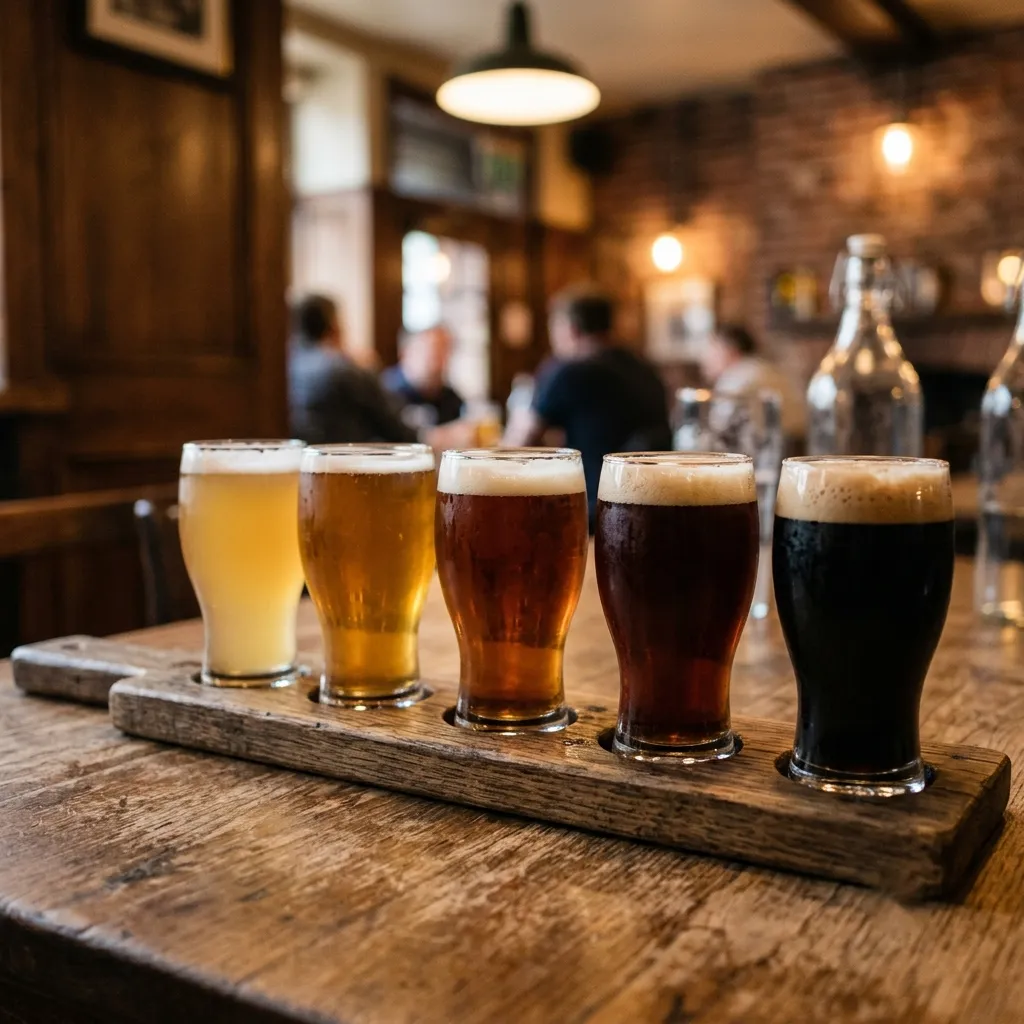
How to host a beer tasting - flight, order and glassware
One big pint of your favourite beer is a pleasure, but little learning. A flight - several small samples of different beers side by side - is something else entirely: in one evening you hear how a lager differs from an ale, how hops sound against malt, and suddenly you understand styles instead of remembering them by name. And you can set it up at home with no equipment, from four bottles and a few glasses.
Pick a theme
A flight works when the samples have something in common - then the differences show:
- One style, different breweries - say four IPAs. You will hear how differently hops work.
- A ladder by colour and strength - lager, pale ale, amber, porter. A great lesson that colour is not strength.
- Lager vs ale - two lagers and two ales side by side. The cleanest way to hear the role of yeast, which we unpack in lager vs ale.
- A hop journey - American, New Zealand, German IPA. Citrus, tropics, herb side by side.
Setting it up step by step
- 4-6 beers in small pours (100-150 ml each). More, and the fizz and fullness beat your palate.
- The same glasses for each beer, ideally tulip or plain narrow ones - identical, so the comparison is fair.
- Order: light to strong, pale to dark, gentle to heavily hopped. A big IPA or stout first will kill a light lager after it.
- Not too cold. Ice-cold beer does not smell - give it a few minutes, light styles 6-8 degrees, fuller ones 8-10.
- Water and bread between samples.
How to taste beer
- Look - colour, clarity, head (how it holds).
- Smell right after pouring, while the head pushes the aroma up - hops, malt, fruit, yeast.
- Sip and hold it on the tongue - malt sweetness up front, hop bitterness at the end, carbonation, body.
- Finish - dry or sweet, short or long, how long the bitterness lingers.
- Go back to earlier samples - the contrast is only audible when you jump between them.
What to look for
Compare the samples on the same axes: maltiness, hoppiness and bitterness, fruit and esters (banana, citrus), roasted notes, carbonation, body, dryness. The label tells you the style, strength and sometimes the hops - how to read it is in how to read a beer label. And where the coffee and chocolate in dark beers come from we unpack in dark beers: porter and stout.
Note and overlay the profiles
After five beers it is easy to mix up which had the citrus hop and which the roasted malt. So note as you go. In GustoNote you record each beer separately with its style, hops and malts, then overlay their profiles on one radar - maltiness, bitterness, fruit and body line up side by side. The aroma wheel suggests words, and after a flight like that you really understand how styles differ in the glass, not just by name.