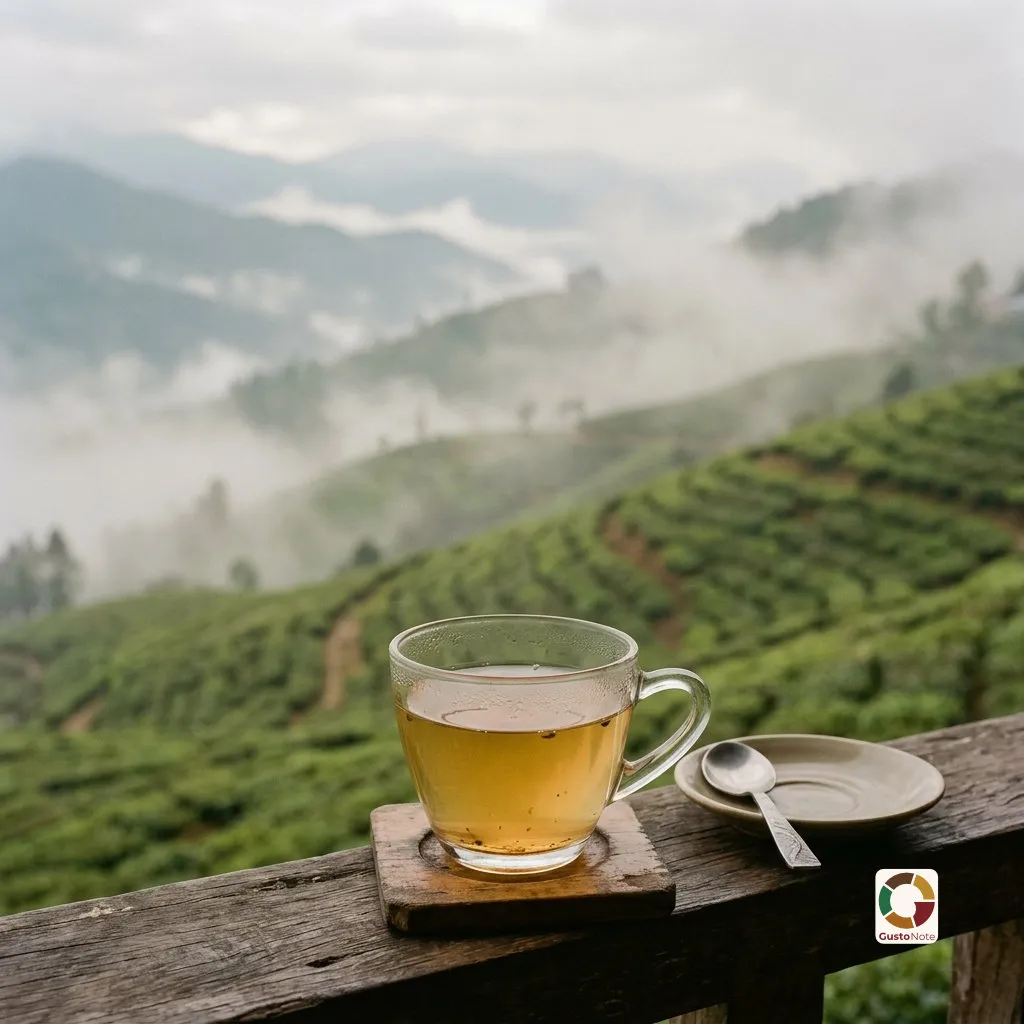
Darjeeling - the champagne of teas and the mystery of flushes
Darjeeling is a name that in the world of tea means roughly what Bordeaux or Champagne mean in the world of wine. It is a tea from a specific, small region in the Indian Himalayas, prized for its delicacy, complexity and unique character. It is called the champagne of teas, and this is no accidental slogan. Like champagne, Darjeeling is protected by law and may come only from one place on earth. And its flavour changes dramatically depending on the season in which the leaves were picked. Understanding this region means understanding how much tea can taste of place and time.
Why the champagne of teas
The nickname champagne of teas has a deeper sense than mere praise of quality. Darjeeling, like champagne, is covered by geographical protection. Only tea grown in the officially designated Darjeeling region in the state of West Bengal may legally bear this name. It was the first such protection granted to an Indian tea, exactly as the name champagne is reserved for sparkling wines from the French region of Champagne.
This protection is not just a formality. It protects the identity of a flavour rooted in a specific terroir, that is the unique combination of altitude, climate, soil and cultivation. Darjeeling is a rare and prized tea precisely because it cannot be reproduced anywhere else, even using the same bushes. I cover how a region shapes tea flavour more broadly in black tea and its regions.
Terroir: Himalayan slopes in the mist
The secret of Darjeeling lies in its geography. The tea gardens lie high, on the steep slopes of the Himalayas, usually at an altitude of six hundred to two thousand metres above sea level. At such heights it is cool, and the slopes are wrapped in mountain mist. These conditions have a crucial effect on flavour.
Cold and mist slow the growth of the bushes. Slower-growing leaves develop gradually and accumulate more aromatic compounds, giving a tea more complex, delicate and multi-layered than teas from the hot lowlands. It is the same principle winemakers know: slower ripening in a cooler climate gives a subtler, more refined product. That is why Darjeeling is rarely heavy or strongly tannic but rather light, aromatic and elegant.
Flushes, or the seasons of harvest
The most important concept in the world of Darjeeling is the flush, that is the harvest. Unlike many teas picked throughout the season without distinction, Darjeeling is divided into several distinct harvests over the year, and each gives a tea of completely different character. It is a bit like vintages in wine, except within a single season.
Four main flushes are distinguished:
- The first flush, picked in early spring, in March and April, when the bushes wake after winter. It is the most delicate and most prized tea: light, floral, fresh, almost green in character, with a light, grassy-floral profile.
- The second flush, picked in summer, in May and June. It is a fuller, riper, rounder tea, famous for its legendary muscatel note, more on which shortly.
- The monsoon flush, in the rainy season, gives a stronger, darker and simpler tea, often used in blends and everyday teas.
- The autumn flush gives a tea with a copper-amber liquor, smooth and full, with notes of ripe fruit, nuts and warm spices.
This division is key for anyone who wants to know Darjeeling properly. When buying this tea, it is always worth checking which flush it comes from, because it is the flush that most decides what you will find in the cup.
The mystery of the muscatel flavour
The most fascinating feature of Darjeeling is the muscatel flavour of the second flush. It is a sweet, fruity, slightly wine-like note, reminiscent of muscat grapes, hence the name. This flavour is exceptionally rare in the world of tea and appears almost exclusively in summer second-flush Darjeelings. For many connoisseurs it is the holy grail of tea.
Where does it come from? It is the result of a unique combination of factors: a specific season, the ripeness of the leaf, the terroir, and according to many sources also the action of tiny insects that nibble the leaves, triggering defensive reactions in the plant that enrich the aroma. Whatever the exact mechanism, the effect is unmistakable: a sweet, almost mulled depth you will not find in any other black tea. It is further proof that Darjeeling is a tea of almost wine-like complexity.
The role of oxidation
The character of each flush depends not only on the season of harvest but also on the degree of oxidation of the leaf. Oxidation is the process that turns a fresh green leaf into black tea, and Darjeeling has its own rules here. The first flush is lightly oxidised, which is why it keeps a light, almost green, floral character and is sometimes classified somewhere between a green and a black tea. The second and autumn flushes are more heavily oxidised, giving a fuller, darker, more fruity profile.
That is why the same plantation, the same bushes, can give over the course of a year teas so different it is hard to believe they share an origin. I cover the process itself in tea oxidation, because it is the key to understanding why teas from one leaf can be so different.
Gardens and the markings on the package
Darjeeling is a tea in which the specific garden, that is the plantation, matters, just as in wine the specific vineyard matters. The region is divided into several dozen historic gardens, and the best of them, sold as single estate, that is from one plantation, have their own recognisable character and are prized like wines from good appellations. It is a completely different world from the anonymous blends scooped into tea bags.
On the package of a good loose-leaf tea you will also meet mysterious abbreviations describing the quality and size of the leaf, such as FTGFOP. It is a leaf grading system in which the successive letters denote, among other things, the presence of delicate young buds and the whole leaf rather than its broken pieces. The longer and more elaborate the abbreviation, the higher the leaf grade usually is. You do not need to know it by heart, but it is worth knowing that whole, carefully picked leaves give a subtler tea than the fine dust of tea bags. For a taster, the garden and the flush are the two most important clues on the package.
How to brew Darjeeling
The delicacy of Darjeeling demands care in brewing. It is a tea easily spoiled by water that is too hot and a steep that is too long, because then instead of finesse we get bitterness and astringency. The first flush in particular, the most green in character, likes water a little cooler than boiling, around the mid eighties Celsius, and a short brewing time, to draw out the floral freshness rather than the tannins.
The second and autumn flushes, being fuller and more oxidised, will take hotter water, closer to the temperature of a classic black tea. The shared rule is this: brew rather shorter and cooler than too long and too hot, and taste as you go. Darjeeling rewards attention. I cover the general rules in how to brew tea.
How to explore it
The best way to truly understand Darjeeling is to set the first and second flush of the same plantation side by side and brew them in parallel. From sip to sip you will feel the light, floral freshness of spring give way to the sweet, muscatel depth of summer. It is one of the most beautiful lessons in how the time of harvest changes a tea. In GustoNote you record the flush, the intensity of flavour, the fruity and floral notes and your impressions of each tea, and after a few entries you will see exactly which harvest draws you most. It turns the mysterious world of flushes into a clear, personal map. You will find a full overview of tea types in types of tea.