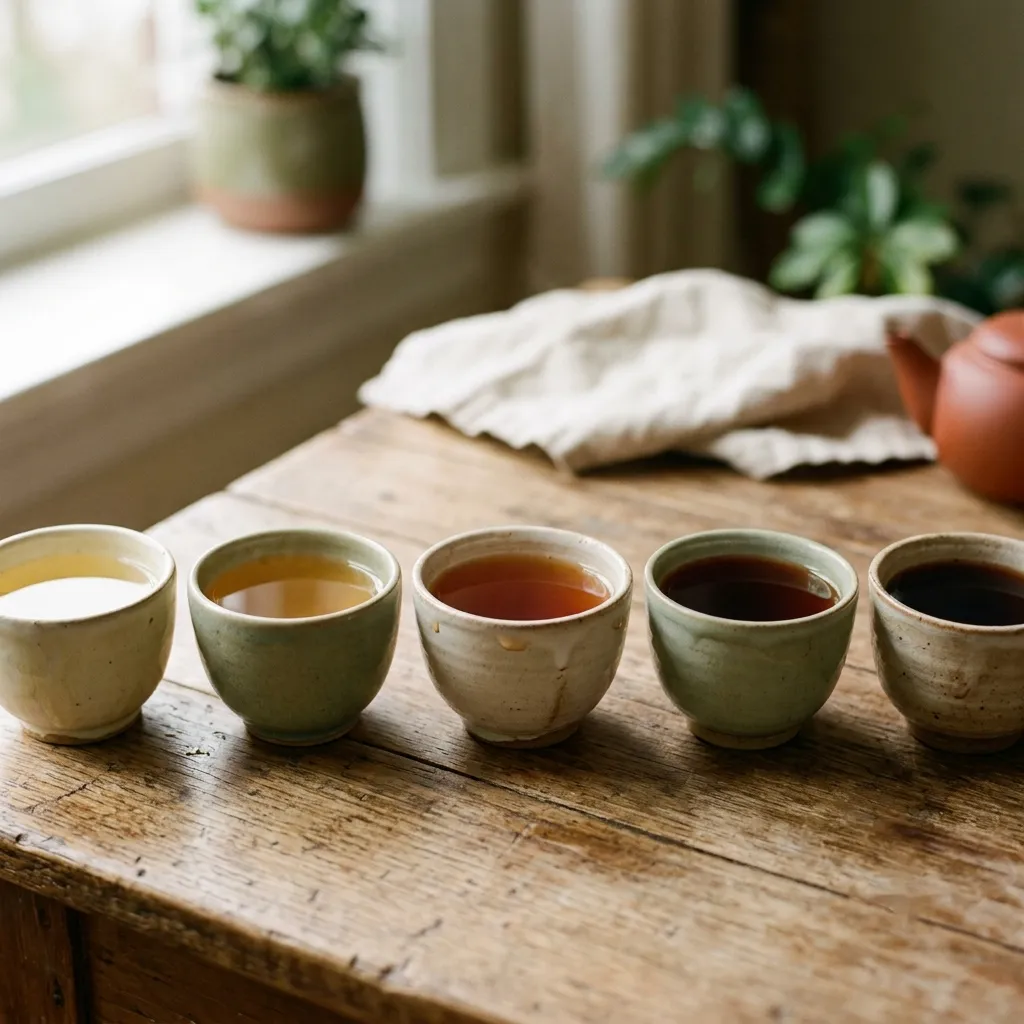
How to taste tea side by side - a home comparison
A single cup of tea tells you what it is. Several cups side by side tell you why - and that is where the real learning begins. When you brew several teas under the same conditions and compare them in one session, you suddenly hear differences that escaped you before: between green and white, between two oolongs, between a first and a second harvest. It is the tea equivalent of cupping, and you can do it at home from a few cups.
Why the same conditions are key
The secret to a comparison is standardising. If you brew one tea stronger or with hotter water, you are comparing the brewing, not the tea. So give each one the same amount of leaf, the same water temperature and the same time. Only then do the differences you feel come from the tea itself. It is an extension of the rules from how to brew tea - here you keep them equal for everyone.
Pick a theme
A comparison works when the teas have something in common:
- One type, different origins - say three greens from China and Japan. You will hear the difference between grassy and nutty.
- A cross-section of types - white, green, oolong, black side by side. The best lesson in how the types of tea differ and how the level of oxidation rises.
- Two oolongs - one green, one heavily roasted. You can hear what the roasting does.
- The same tea, two steeps - compare the first infusion with the second to hear how the leaf develops (more in multiple infusions).
How to set it up
- 3-5 teas is the sweet spot. Cups of the same size, one per tea.
- Measure the leaf equally for each (say 1 teaspoon per 200 ml).
- Match the water to the most delicate one, or brew each in its own range, but stick to it consistently. Delicate ones (white, green) cooler, stronger ones (black, dark oolong) warmer.
- The same time - and remove the leaves so the brew does not turn bitter while you move between cups.
- Water to rinse your mouth between samples.
What to look for
Compare the teas in turn on the same axes:
- Aroma of the dry leaf and the brew - floral, grassy, fruity, nutty, smoky, mineral.
- Flavour and body - light and delicate or full and substantial.
- Bitterness and astringency - how much and whether pleasant; if too much, usually the water or time is to blame, which we cover in why your tea tastes bitter.
- Aftertaste - a sweet finish, minerality, how long it holds.
Note and overlay the profiles
After five teas it is easy to mix up which was floral and which was mineral. So note as you go. In GustoNote you record each tea separately, then overlay their sensory profiles on one chart - aroma, body, sweetness and astringency line up side by side and the contrast is instantly visible. The aroma wheel suggests words, and after a few sessions like this you start hearing nuances in tea you never noticed before. That is exactly how a palate is built.